


GEN Z PARENTING
The adults have looked upon the younger generation with a mixture of curiosity, admiration, uncertainty, and sometimes disapproval in every period of history. The elders of one age often feel that the children of the next have changed too quickly, too deeply, or too unpredictably. This tension is not new; it has existed since the earliest societies. Yet the present moment offers an especially dramatic example of this contrast, for the children who fill our homes and classrooms today—those we call Generation Z—have arrived in a world very different from the one their parents knew. Their childhood is shaped by devices that speak, screens that never sleep, information that appears in an instant, and an atmosphere buzzing with voices from every corner of the globe. The parents are left to ask themselves how one should raise a child whose experiences, instincts, and expectations are unlike any that came before.
To call Gen Z “digital natives” is accurate but incomplete. They are children whose earliest memories involve tapping on screens long before they learned cursive writing, searching online before consulting a dictionary, and viewing the world through windows made of glass and light. The device that adults approach cautiously, and sometimes suspiciously, is to them as natural as the pencil once was to earlier generations. Their world unfolds rapidly, and so do their minds. They learn with remarkable speed, not only because they have access to endless knowledge but because they have developed an instinctive readiness to deal with complexity. They move between apps, platforms, conversations, and tasks with an agility that often leaves adults bewildered.
Yet this same quickness of mind brings with it a certain fragility. The child who absorbs information in seconds may reach the limits of concentration just as quickly. The one who can shift from video to video with a flick of the finger may struggle to remain still, silent, or attentive for long. The same child who embraces novelty may demand explanations for rules, expectations, and decisions that earlier generations would have accepted without protest. A parent may find this questioning uncomfortable, yet behind it lies a developing intelligence that craves clarity. Gen Z children do not simply wish to obey; they wish to understand. They seek meaning, fairness, and dialogue. They do not respond well to commands delivered without explanation; but when given reasons, they often show remarkable cooperation.
The challenge, then, is not that Gen Z is difficult but that the world around them has shifted the very climate in which childhood takes place. Parents and teachers should learn this climate as sailors learn the weather. The winds are different; the tides follow new patterns; and the instruments of the past do not always guide the voyage ahead. A parent cannot hope to raise a 21st-century child with the methods of the 20th century alone. The essence of love and guidance remains unchanged, but the manner in which it must be given demands new thought.
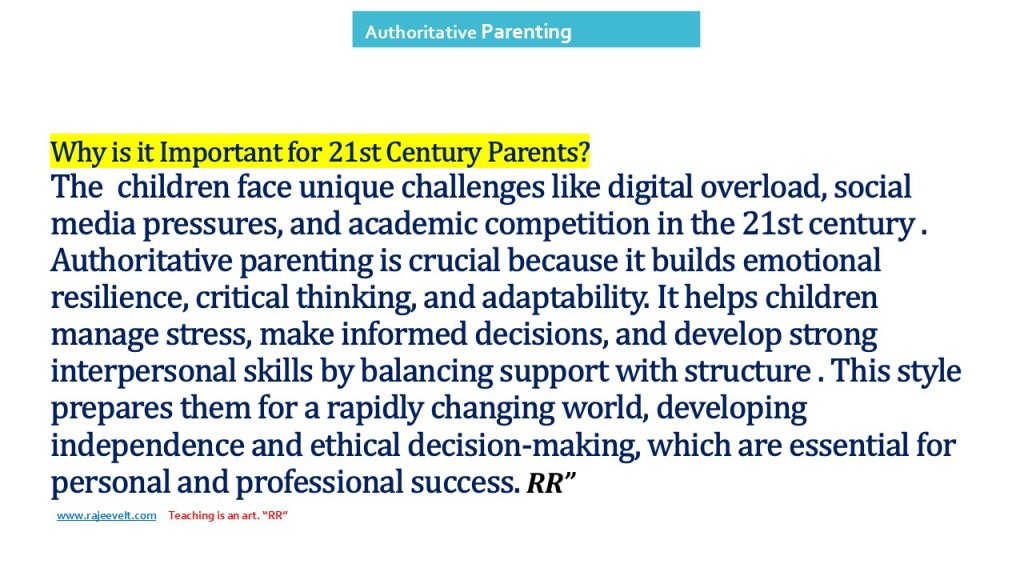
Why should parents take the time to understand these changes? The answer is simple: without understanding, communication weakens; and where communication weakens, trust follows suit. A parent who misreads a child’s world may find themselves puzzled by behaviour that is perfectly natural within that world. A child whose emotional life is shaped by social media will respond differently from one shaped by neighbourhood play. A child who receives constant information may experience pressure of a kind earlier generations did not know. A child who sees endless examples of comparison and competition online may encounter self-doubt more intensely than their parents ever imagined.
If the home is to remain a place of guidance and comfort, it must adjust. If the school is to remain a place of learning and growth, it must cooperate with the home. And if both institutions—home and school—are to assist the child, they must work not as two separate islands but as partners connected by steady dialogue.
Gen Z faces challenges that are both visible and invisible. The visible challenges are those adults frequently mention: too much screen-time, too little concentration, insufficient physical activity, distractions everywhere, and a temptation to chase trends rather than truth. These concerns are real. A child surrounded by digital noise may find it difficult to sit quietly with a book or to place uninterrupted attention on a single task. Messages, videos, and notifications constantly compete for the child’s mind, and the result is an attention span that can flicker in seconds.
But beneath these visible challenges are quieter ones. A child exposed to social media may carry expectations no child should naturally have. A world filled with images of success, beauty, achievement, and material display may lead them to compare themselves constantly with others. They may feel pressure to perform, to excel, to avoid mistakes, to keep pace with peers who appear—in the filtered world of the internet—to be perfect. They may begin to believe that failure is something shameful, rather than a step in learning. They may struggle to handle disappointment, criticism, or delay because their emotional lives are still delicate.
On the other side stand the parents, who too are facing their own set of challenges. They are the first generation of adults attempting to raise children who live simultaneously in the physical and digital worlds. The parents did not grow up in such an environment; they have no reference point in their own childhood by which to measure the experiences of their sons and daughters. They must balance long working hours with the demands of raising children who expect conversation, clarity, and attention at the end of the day. They must manage the school’s expectations, society’s expectations, and their own expectations—all while trying to maintain a peaceful home. It is easy to see why many parents feel stretched thin.
Communication, once assumed to be natural within a family, has become something that requires conscious effort. The hurried adult sometimes chooses command over conversation; the impatient child sometimes chooses argument over listening. Screens interrupt the quiet moments that once belonged to shared meals and evening conversations. Parents speak less; children speak less; yet both desire connection. In such an environment, misunderstandings easily arise.
The parents should return to the oldest art in human relations to overcome these difficulties: the art of listening. A child who is heard becomes calmer. They feel valued, understood, and acknowledged. When parents allow children to speak—truly speak—they discover that many behavioural issues soften. A child who is encouraged to express their emotions learns to identify and manage them. When adults stop interrupting, children stop shouting. And when adults refrain from shouting, children learn self-control.
Another essential change involves the handling of digital life. The answer is not to ban devices entirely, for doing so ignores their role in modern learning. Instead, parents can create domestic customs that protect the child’s attention and sleep. A home in which phones remain outside bedrooms, in which meals are shared without screens, and in which each member of the family observes reasonable digital limits becomes a home with clearer minds. Children need consistency more than punishment; clear expectations more than threats. When rules are explained and applied uniformly, children accept them more readily.
We believe that emotional strength cannot be taught through lectures alone. It emerges slowly through daily experiences. A child learns confidence not only through success but also through failure. Parents often wish to shield their children from disappointment, but life does not spare anyone from it. A child who never experiences a setback in childhood may struggle severely with even small difficulties in adulthood. The parent who remains calm during a child’s mistake teaches by example that errors are not disasters but lessons. When a parent comments on effort rather than outcome, the child discovers courage. They realise that improvement is possible and that failure does not define their identity.
No parent can walk this path alone. Schools are not merely institutions of academic instruction; they are extensions of the child’s environment and, in many ways, companions in the task of upbringing. When parents and teachers maintain steady communication, the child experiences consistency. What is expected at home aligns with what is expected at school. The child does not feel torn between two voices but supported by two guiding forces that speak with reason and unity. Attending meetings, acknowledging feedback, and trusting the teacher’s insight strengthens this partnership.
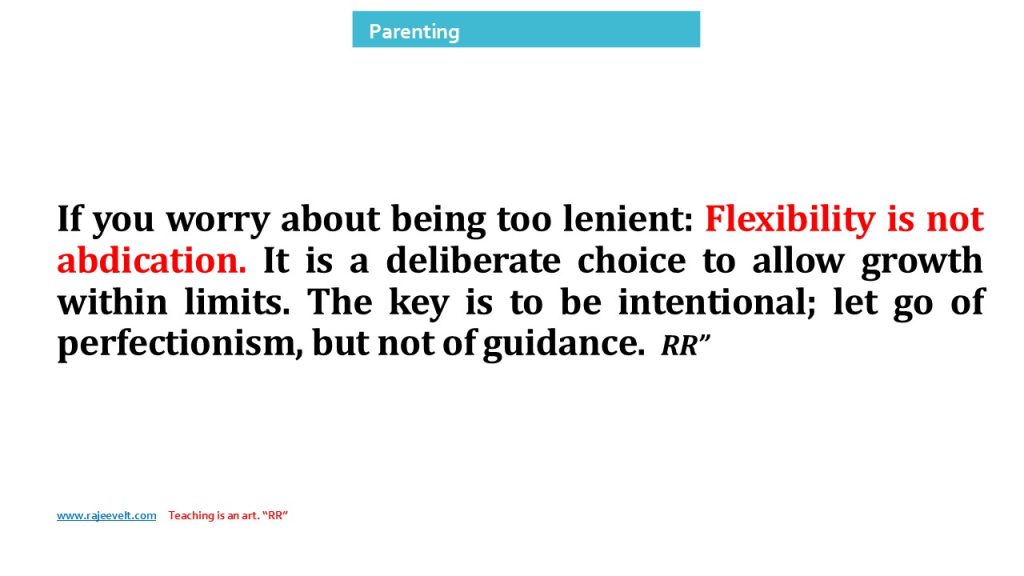
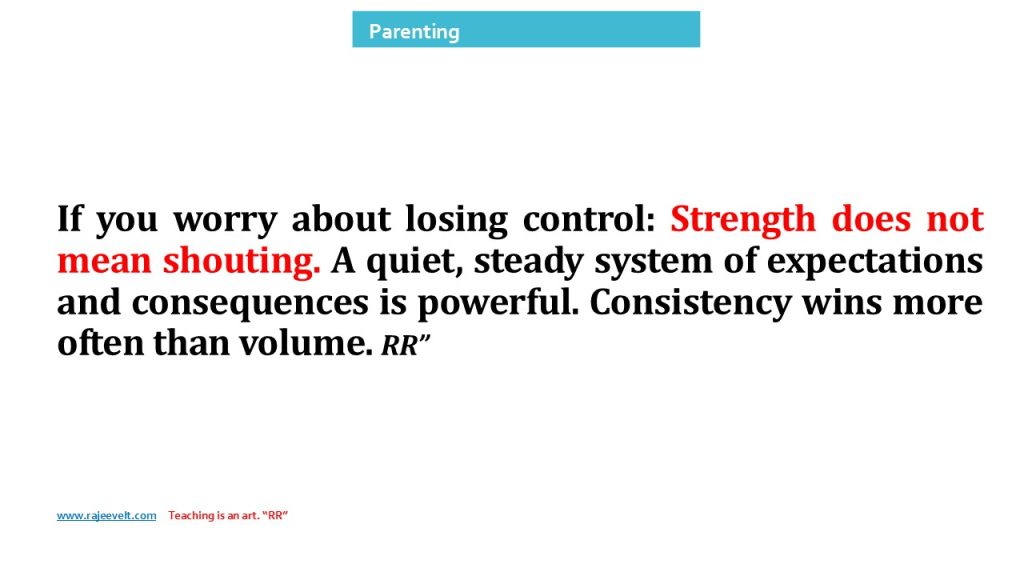
Discipline too should be reconsidered. The Gen Z child often resists harsh scolding not because they lack respect but because they interpret it as rejection. They respond more constructively to calm firmness than to loud commands. Parents who explain the purpose of rules create children who follow them thoughtfully. The home that maintains clear routines—consistent wake-up times, study hours, outdoor play, reading periods, and bedtime—is a home in which children develop habits that quietly shape their character.
Responsibility is another vital aspect of childhood. The convenience of modern life has removed many small tasks that once prepared children for adult life. Yet even simple household responsibilities—setting the table, organising books, managing their school bag, helping with small chores—build reliability. The child learns that they are not merely guests in the home but contributors to it. Responsibility instils confidence far more effectively than constant reminders.
Parents should also be mindful of their own conduct. Children observe everything. They watch how adults speak to others, how they respond to difficulty, how they handle anger, and how they treat family members. A parent who seeks patience in their child should show patience themselves. A parent who desires politeness must speak politely. A parent who wants the child to read must be seen reading. Children absorb behaviour more readily than advice.
The quality time has become one of the most precious gifts a parent can offer in this fast-moving world. It does not require elaborate outings or expensive activities. Even a quarter of an hour of undistracted conversation can strengthen the bond between parent and child. A walk after dinner, a shared cup of tea, a discussion about school, a moment of shared laughter—these simple acts carry a significance the child will remember long after the toys, screens, and trends of the moment fade away.
The key to raising Gen Z lies not in resisting the modern world but in helping children move through it with balance. They need guidance, not control; support, not indulgence; clarity, not confusion. They need homes that are orderly yet warm, conversations that are honest yet gentle, expectations that are high yet reasonable.
A child who feels supported becomes confident. A child who is trusted learns responsibility. And a child who is heard gains emotional security.
To guide this generation is not to lament the past or fear the future, but to accept the present with steady understanding. The children of today bring with them the potential for a world we cannot yet fully imagine. The task of parents and teachers is to prepare them—not by shaping them into copies of earlier generations, but by helping them become thoughtful, resilient, balanced human beings capable of meeting the challenges of their own era.
Parenting in any century is an act of patience, insight, and dedication. But in this century, it is also an act of adaptation. The child changes, the world changes, and the parent must change as well. Yet amid all this change, one truth remains: a child who grows up in an atmosphere of respect, clarity, discipline, affection, and understanding carries within them the strength to face life with composure.
The Gen Z child, with all their curiosity, sensitivity, speed, and complexity, is not a challenge to be solved but a person to be understood. When parents and schools join hands in this understanding, they create not only better children but a better society. And perhaps, someday, these children will look back and say that in the midst of a fast and noisy world, their homes and schools offered them the rare gifts of steadiness, guidance, and care—the gifts that no screen, device, or trend could ever replace.
Grow Together Glow Together
Regards
Rajeev Ranjan
School Education
“Let knowledge grow from more to more.”
Alfred Tennyson, “In Memoriam”, Prologue, line 25
Resources and Learning Resources Web-links
References
- Pew Research Center. Where Millennials end and Generation Z begins (2019); On the Cusp of Adulthood… (2020). (Gen Z definition and demographics). Pew Research Center+1
- World Health Organization. Adolescent mental health: Key facts (2024). (Global burden; suicide in 15–29). World Health Organization
- NHS Digital. Mental Health of Children and Young People in England, 2023. (1 in 5 with probable disorder; stabilizing at elevated rates). NHS England Digital+1
- NIMH / CDC. Suicide statistics / FastStats (2023–2024). (Leading causes among adolescents and young adults). nimh.nih.govCDC
- Orben & Przybylski. Nature Human Behaviour (2019). (Digital technology & well-being: negative but tiny associations; ~0.4% variance). Zenodo
- U.S. Surgeon General (HHS). Social Media and Youth Mental Health Advisory (2023). (Risks, benefits, and policy recommendations). HHS.gov
- American Academy of Pediatrics. Digital Media and Sleep; Media Use in School-Aged Children and Adolescents (policy and technical reports). Pediatrics+1
- Electric Lighting & Adolescent Circadian Outcomes (2023–2024 narrative/experimental reviews). (Light timing and melatonin). PMC
- JAMA Pediatrics / JAMA Network Open reviews (2022–2023). (Pandemic-era symptom changes; social media & youth mental health scoping synthesis). JAMA Network+1