


Artificial Intelligence Significance & Concerns in Education
Artificial Intelligence (AI) is reshaping education at a pace that few technological shifts have matched. We are witnessing a transformation that extends far beyond digital classrooms or online learning platforms. AI introduces adaptive systems, predictive analytics, intelligent tutoring, and automated administrative tools that redefine how we teach, learn, and manage educational institutions. AI in education refers to the use of machine learning algorithms, natural language processing, and data-driven systems to enhance learning experiences and outcomes. AI is increasingly positioned as both a solution and a subject of debate as global education systems strive to become more inclusive, efficient, and personalized. We should therefore explore its significance alongside its limitations to ensure a balanced, ethical, and sustainable integration into education.
Benefits of AI in Education
We recognize the primary significance of AI in its ability to personalize learning. Traditional classrooms often operate on a one-size-fits-all approach, where learners progress at a uniform pace regardless of their abilities or learning styles. AI disrupts this model by enabling adaptive learning systems that tailor content, pace, and feedback to individual students i.e. intelligent tutoring systems can identify a learner’s strengths and weaknesses in real time and adjust instructional materials accordingly. This ensures that advanced learners remain challenged while those who struggle receive targeted support. AI does not replace teachers in this context; rather, it enhances their capacity to address diverse learner needs more effectively.
We observe that AI enhances accessibility and inclusivity in education. Learners with disabilities or those in remote and underserved regions often face barriers to quality education. AI-powered tools such as speech-to-text, real-time translation, and assistive technologies help bridge these gaps i.e. visually impaired students can use AI-driven audio tools to access written content, while language translation systems enable students to learn in their preferred language. In global education systems, where linguistic and cultural diversity is vast, such tools play a critical role in democratizing access to knowledge. This expansion of accessibility aligns with international goals of equitable education for all.
We feel that AI contributes significantly to administrative efficiency within educational institutions. Educators and administrators spend considerable time on tasks such as grading, scheduling, and data management. AI systems can automate these processes, allowing educators to focus more on teaching and mentorship. Automated grading systems can evaluate objective assessments quickly and accurately, while predictive analytics can identify students at risk of dropping out. These capabilities enable institutions to make data-informed decisions that improve student retention and academic success. AI supports not only learning but also the overall management of educational ecosystems.
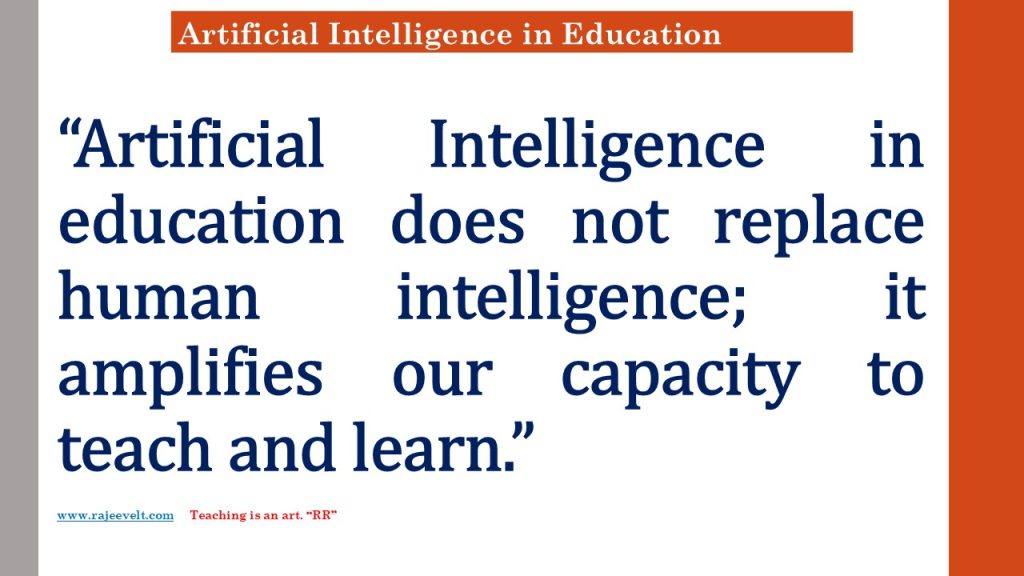
“Artificial Intelligence in education does not replace human intelligence; it amplifies our capacity to teach and learn.” We acknowledge the growing role of AI in shaping future-ready skills. There is increasing demand for skills such as critical thinking, problem-solving, digital literacy, and adaptability. AI-driven educational platforms can simulate real-world scenarios, offering students opportunities to apply knowledge in practical contexts. For example, virtual laboratories and AI simulations allow students to conduct experiments that may not be feasible in physical settings due to cost or safety constraints. Such experiences prepare learners for complex, technology-driven environments, ensuring that education remains aligned with the needs of modern industries.
Challenges and Concerns
“The true power of AI in education lies not in automation, but in personalization.” We should also consider the ethical concerns associated with AI in education. Data privacy is one of the most pressing issues, as AI systems rely heavily on student data to function effectively. The collection, storage, and use of personal information raise questions about consent, security, and ownership. If not properly regulated, these systems could expose sensitive data to misuse or breaches. Algorithmic bias presents a significant challenge. AI systems trained on biased datasets may produce unfair outcomes, potentially disadvantaging certain groups of students. We must therefore ensure that AI systems are transparent, accountable, and designed with fairness in mind.
We recognize that the integration of AI may impact the role of educators in complex ways. While AI can automate routine tasks, there is concern that excessive reliance on technology could reduce human interaction in learning environments. Education is not solely about content delivery; it also involves emotional support, mentorship, and the development of social skills. Teachers play a vital role in fostering these aspects, which AI cannot fully replicate. We must therefore maintain a balance where technology supports, rather than replaces, the human elements of education. Professional development for educators is essential to help them adapt to AI-enhanced teaching environments.
“We shape AI in education, and in turn, it shapes how we understand knowledge and learning.” We should also examine real-world examples that illustrate both the potential and challenges of AI in education. Adaptive learning platforms used in various countries have demonstrated improved student engagement and performance by offering personalized learning paths. AI chatbots assist students in higher education with queries related to admissions, coursework, and campus services, improving responsiveness and efficiency. However, there have also been instances where automated grading systems misinterpret student responses, highlighting the limitations of current AI technologies. These examples underscore the importance of continuous evaluation and refinement of AI systems to ensure reliability and effectiveness.
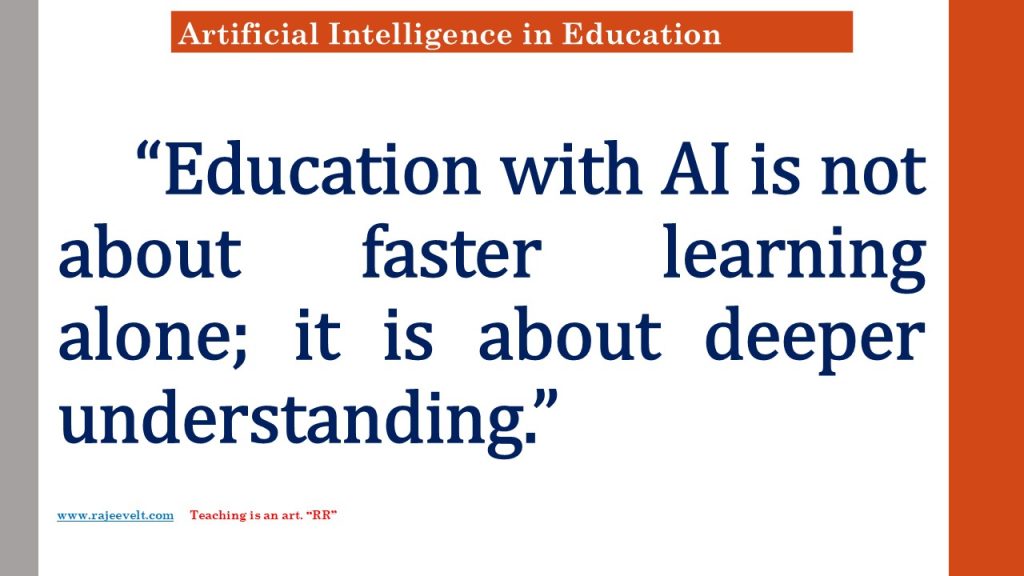
We would like to present a case illustration to better understand AI’s practical impact. Consider a public school system implementing an AI-based early warning system to identify students at risk of academic failure. The system analyses attendance records, assignment submissions, and assessment results to flag students who may need additional support. Teachers then intervene with targeted strategies such as tutoring or counselling. This approach has shown improvements in student retention and performance. However, it also raises questions about data interpretation and the potential for labelling students prematurely. “Education with AI is not about faster learning alone; it is about deeper understanding.” We should therefore use such systems responsibly, ensuring that they support rather than stigmatize learners.

Ethical Implications
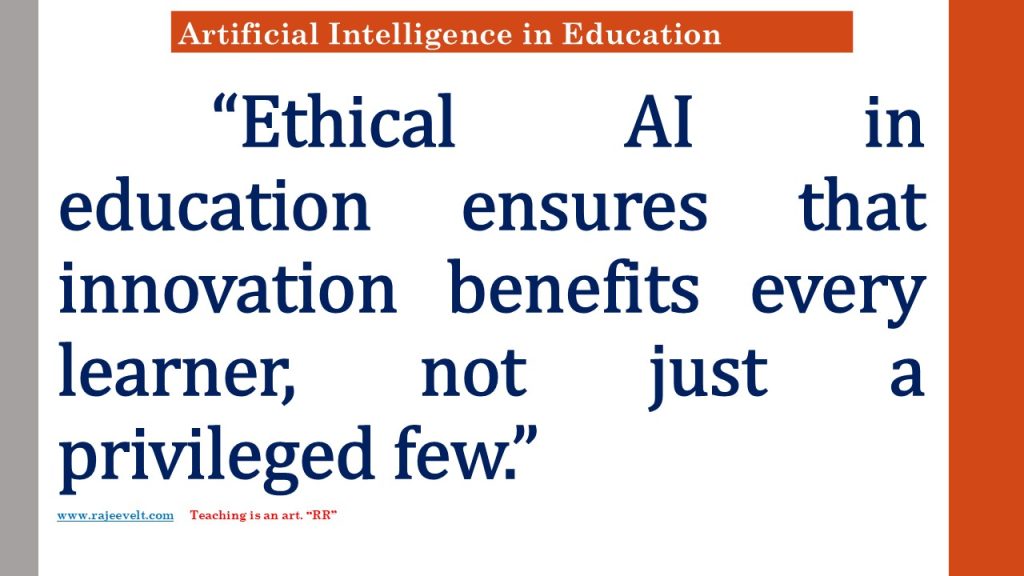
We reflect on the broader societal implications of AI in education. As AI becomes more integrated into learning systems, disparities in access to technology could widen existing educational inequalities. Wealthier institutions may have greater resources to adopt advanced AI tools, while underfunded schools may struggle to keep pace. This digital divide could create uneven learning opportunities across regions and populations. Policymakers, educators, and technology providers must collaborate to ensure equitable access to AI-driven educational resources. Public investment and international cooperation will be crucial in addressing these disparities. We believe that “Ethical AI in education ensures that innovation benefits every learner, not just a privileged few.” We believe that Artificial Intelligence in education represents both a transformative opportunity and a complex challenge. Its ability to personalize learning, enhance accessibility, and improve efficiency holds significant promise for global education systems. At the same time, concerns related to ethics, data privacy, equity, and the role of educators must be addressed with careful consideration. We should adopt a balanced approach that leverages AI’s strengths while mitigating its risks. We can create an educational environment that is innovative, inclusive, and aligned with the needs of a rapidly changing world.
Resources and Learning Resources Web-links
https://www.rajeevelt.com/tag/importance-of-artificial-intelligence