


The “Wild Horse Effect” in Leadership: Power, Direction, and Human Potential
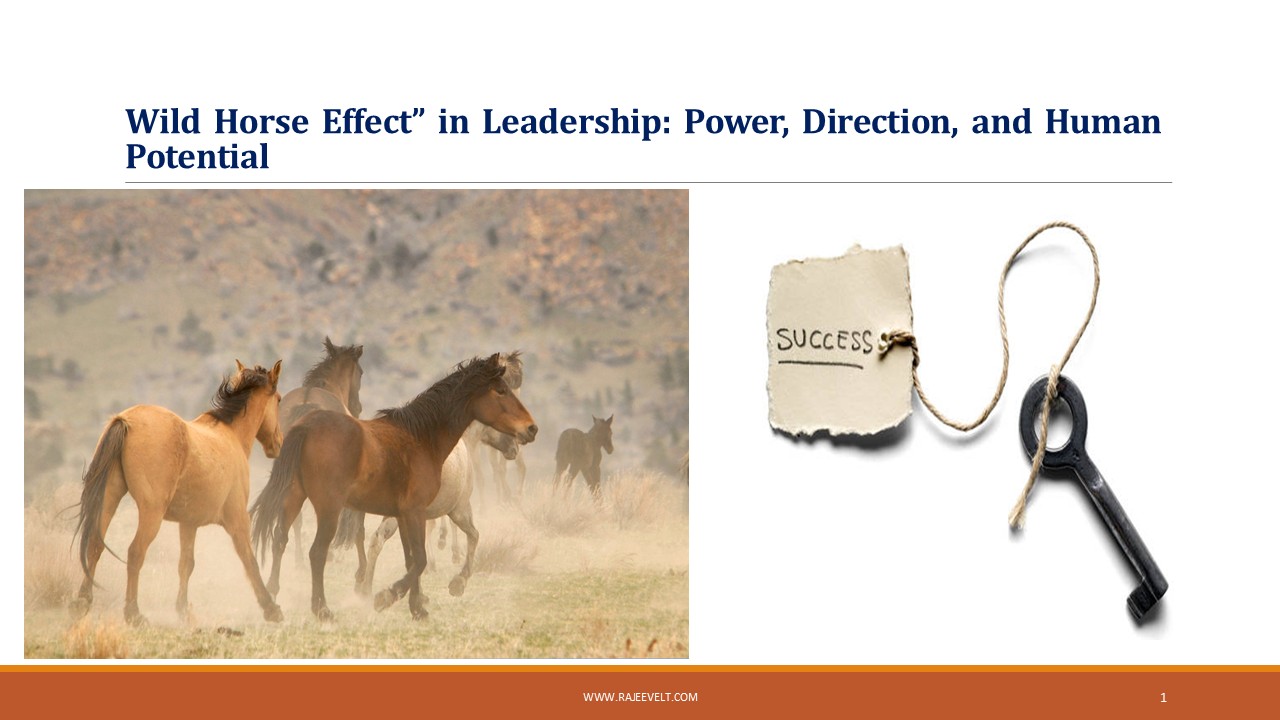
Humanity has admired the wild horse in every age of civilization. Untamed, fearless, swift, and fiercely independent, the wild horse has long symbolized raw energy and unconquered strength. Yet history also teaches us another truth: strength without direction often becomes destruction, while strength guided with wisdom becomes greatness. From this timeless observation emerges what many thinkers describe metaphorically as the “Wild Horse Effect.”
The Wild Horse Effect refers to the condition in which immense talent, emotion, ambition, intelligence, or energy exists without disciplined guidance, emotional balance, or moral direction. We frequently witness in leadership, organizations, education, and personal development that individuals or groups possessing extraordinary potential yet struggling because their energy is scattered, impulsive, or uncontrolled. The wild horse runs with magnificent speed, but without reins, purpose, or destination, its power may exhaust itself in circles. Leadership, therefore, is not merely the act of generating energy; it is the art of channelling energy toward meaningful outcomes.
We are living in a rapidly changing world shaped by technology, competition, uncertainty, and social transformation, the Wild Horse Effect offers profound insight into human behaviour. It explains why gifted teams fail, why talented individuals collapse under pressure, why ambitious institutions lose direction, and why emotional intelligence has become essential in modern leadership. At the same time, it reveals how disciplined guidance, purpose-driven leadership, and inner self-mastery can transform chaos into achievement.
Meaning of the Wild Horse Effect
The metaphor of the wild horse originates from nature itself. A wild horse possesses remarkable physical power, instinctive intelligence, endurance, and speed. However, until trained and directed, its strength remains unpredictable. It may resist cooperation, react emotionally, or move without purpose. The same pattern appears in human society, in organizations, institutions, governments, corporations, and even within individuals.
We may consider a brilliant employee who possesses creativity but lacks emotional control. We may observe a political movement driven by passion but lacking ethical direction. We may encounter students with extraordinary intelligence who struggle because discipline and focus are absent. These examples represent forms of the Wild Horse Effect.
The concept does not criticize energy or ambition. On the contrary, it celebrates human capability. The danger lies not in strength itself but in unmanaged strength. Leadership becomes essential because leadership transforms potential into contribution.
Ancient philosophers often reflected on this idea. The Greek philosopher Plato compared the human soul to a chariot pulled by powerful horses representing desire, emotion, and reason. Indian philosophy similarly emphasized self-control as the foundation of wisdom. Modern psychology now confirms what ancient thinkers understood centuries ago: unmanaged impulses frequently weaken long-term success. Thus, the Wild Horse Effect may be understood as the tension between raw power and disciplined direction.
How the Wild Horse Effect Works
The Wild Horse Effect functions through several interconnected psychological and organizational mechanisms.
1. Energy Without Structure
Human beings naturally generate emotional and intellectual energy. Ambition drives innovation. Passion inspires creativity. Competition motivates performance. However, when institutions or leaders fail to create structure, that same energy becomes chaotic.
In organizations, employees may work hard but pursue conflicting goals. Students may possess talent but lack concentration in schools. Public emotion may rise rapidly through social media without careful reflection in societies. The result is exhaustion without meaningful progress. The Wild Horse Effect begins when energy outruns direction.
2. Emotional Reactivity Overrides Rational Judgment
Wild horses react instantly to fear, excitement, or danger. Similarly, human beings often respond emotionally before thinking rationally. Therefore, impulsive reactions create instability in leadership environments.
A leader who makes decisions based on anger, ego, or panic may damage an entire organization. Teams influenced by fear may resist innovation. Employees overwhelmed by stress may lose productivity despite possessing capability.
Modern neuroscience explains this phenomenon clearly. Emotional responses activate faster than rational analysis. The intelligent people may still make destructive choices without self-awareness and discipline. The Wild Horse Effect therefore illustrates how unmanaged emotion can overpower wisdom.
3. Talent Creates Illusion of Invincibility
One of the most dangerous aspects of the Wild Horse Effect is that highly talented individuals sometimes believe discipline is unnecessary. Success can create arrogance. Intelligence can produce overconfidence. Power can weaken humility.
History repeatedly demonstrates that civilizations, corporations, political leaders, and athletes often collapse not because they lacked talent, but because they lacked restraint and self-correction. The wild horse trusts its strength completely. Wise leadership recognizes that strength alone is insufficient.
4. Lack of Shared Vision
The Wild Horse Effect appears in teams and institutions when individuals pursue personal ambition without collective purpose. Every member may run with great speed, yet the organization moves nowhere because direction is fragmented. Leadership must therefore establish a unifying vision. Shared purpose transforms isolated energy into coordinated progress.
The Young Commander and the Untamed Stallion
Centuries ago, a young military commander inherited a powerful kingdom after his father’s death. He was intelligent, ambitious, and fearless. His army admired his courage, and neighbouring rulers feared his determination. Yet the young commander possessed one dangerous weakness: impatience.
One morning, he observed a magnificent black stallion brought into the royal courtyard. The horse was enormous, wild, and uncontrollable. Experienced riders refused to approach it. The young commander, eager to prove his superiority, immediately mounted the horse without preparation.
The stallion exploded with fury. It raced wildly across the fields, throwing the commander violently to the ground. He returned injured and humiliated to the palace in anger.
An elderly stable master quietly approached him and said:
“Your Majesty, the horse was not your enemy. Your impatience was.”
The stable master explained that powerful creatures first require understanding, trust, and disciplined guidance. Strength alone cannot control strength. Wisdom must guide power.
The commander changed his approach. Over many months, he learned patience, observation, timing, and emotional control. Eventually, the stallion became his greatest companion in battle.
Years later, the commander reflected:
“The horse I failed to control was not standing before me. It lived within me.”
This story illustrates the essence of the Wild Horse Effect in leadership. Many leaders attempt to dominate circumstances through force, authority, or speed. Yet sustainable leadership emerges through patience, emotional intelligence, and disciplined direction.
Wild Horse Effect in Modern Leadership
The modern world amplifies the Wild Horse Effect dramatically. Technological acceleration, economic competition, digital communication, and global uncertainty intensify emotional pressure and organizational complexity.
Corporate Leadership
Corporations today often recruit highly ambitious individuals driven by innovation and competition. While ambition fuels progress, organizations may become unstable if leadership neglects culture, ethics, and emotional balance.
We frequently observe companies growing rapidly yet collapsing because internal conflicts, ego-driven decisions, or reckless expansion destroy stability. Leadership must therefore balance innovation with responsibility.
Educational Leadership
Students possess unprecedented access to information and opportunity. Yet distraction, anxiety, social comparison, and digital overstimulation create psychological turbulence.
Educational leaders must not merely produce academic performance; they must help students cultivate focus, resilience, and self-discipline. Knowledge without emotional maturity may produce instability rather than wisdom.
Political Leadership
Political systems often experience the Wild Horse Effect when public emotion becomes more influential than thoughtful dialogue. Anger spreads rapidly through digital platforms. Polarization increases. Leaders may exploit emotion rather than guide it responsibly. Strong democratic leadership requires calm judgment, ethical restraint, and long-term vision.
The Technology Company That Lost Direction
A rapidly growing technology company emerged in a major global city. The founder was celebrated internationally for his brilliance. Young employees admired his creativity, investors praised his boldness, and media outlets described him as a visionary leader.
The company expanded aggressively. Employees worked day and night. New products launched continuously. Profits increased dramatically. Yet beneath the surface, another reality was developing.
The founder dismissed criticism, ignored ethical concerns, and encouraged extreme competition among employees. Meetings became emotionally hostile. Teams competed against each other rather than collaborating. Talented workers experienced exhaustion and anxiety.
Eventually, the company faced lawsuits, employee resignations, and public criticism. Innovation slowed. Investors lost confidence. A senior advisor later summarized the crisis with remarkable clarity: “We built an engine powerful enough to change the world, but we forgot to build brakes.”
The company eventually recovered under new leadership that emphasized emotional well-being, ethical culture, collaboration, and sustainable growth.
This story demonstrates that the Wild Horse Effect does not arise from weakness. It arises from unmanaged intensity. Organizations require both energy and restraint.
Benefits of the Wild Horse Effect
Although the term often highlights challenges, the Wild Horse Effect also reveals important human strengths. Properly guided energy becomes transformational.
1. Extraordinary Innovation
Wild energy frequently drives creativity and discovery. Many inventors, entrepreneurs, artists, and reformers possess unconventional thinking and emotional intensity. Controlled carefully, such energy generates breakthrough innovation. Great leadership does not suppress passion; it channels passion productively.
2. Courage and Risk-Taking
Individuals influenced by strong ambition often challenge limitations that cautious people avoid. They take risks, confront obstacles, and pursue ambitious visions.
Societies would stagnate without bold energy. Progress often begins with individuals willing to move beyond established boundaries.
3. High Motivation and Momentum
Teams with strong collective energy can achieve remarkable productivity. Enthusiasm inspires action. Determination strengthens resilience during crises. The challenge is not eliminating intensity but maintaining balance.
4. Adaptability and Survival
Wild horses survive because they adapt quickly to changing environments. Similarly, energetic organizations often respond rapidly to disruption. Adaptability has become essential for long-term survival in modern economies.
5. Transformational Leadership Potential
Many transformational leaders possess intense inner drive. When guided by wisdom, humility, and ethical purpose, such leaders inspire entire generations. History’s greatest reformers often combined passion with discipline.
Challenges of the Wild Horse Effect
The same qualities that create strength may also create instability.
1. Emotional Burnout
Constant intensity exhausts individuals and organizations. Employees working under relentless pressure may experience anxiety, fatigue, and declining performance. Burnout has become a major global challenge because many institutions reward speed while neglecting sustainability.
2. Conflict and Ego Clashes
Highly ambitious environments frequently generate competition, ego conflicts, and mistrust. The talented individuals may undermine collaboration without emotional intelligence. Leadership must cultivate humility and mutual respect.
3. Impulsive Decision-Making
The Wild Horse Effect encourages rapid action, but speed sometimes weakens judgment. Leaders may pursue short-term victories while ignoring long-term consequences. History contains many examples of powerful leaders destroyed by impulsive decisions.
4. Ethical Risks
When ambition becomes uncontrolled, ethical boundaries may weaken. Organizations may prioritize profit over integrity. Political leaders may manipulate fear. Institutions may sacrifice humanity for performance metrics. Ethics therefore function as the moral reins of leadership.
5. Loss of Direction
Teams filled with energy but lacking shared purpose often become fragmented. Individuals work intensely yet move in different directions. Vision provides alignment.
The Teacher Who Changed a Troubled Student
A teenage boy developed a reputation for aggression and rebellion in a small rural school. Teachers considered him uncontrollable. He argued frequently, ignored instructions, and reacted emotionally to criticism.
One experienced teacher, however, observed something different. She noticed that the boy possessed extraordinary intelligence and curiosity beneath his anger.
She gave him responsibility instead of punishing him constantly. She encouraged him to lead classroom discussions, organize projects, and mentor younger students. At first, he resisted. Gradually, however, his energy found constructive direction.
Years later, the former student became a successful social entrepreneur dedicated to youth development. During a public speech, he reflected on his teacher’s influence:
“Everyone tried to stop my energy. She taught me how to guide it.”
This story reveals one of leadership’s greatest truths: many difficult individuals are not weak; they are directionless. Leadership transforms potential by combining discipline with understanding.
Managing the Wild Horse Effect
Effective leadership does not destroy human energy. It cultivates disciplined freedom.
Emotional Intelligence
Leaders must develop self-awareness, empathy, and emotional regulation. Emotional intelligence allows leaders to respond thoughtfully rather than react impulsively.
Clear Vision and Purpose
Organizations require shared direction. Vision aligns individual ambition with collective goals.
Discipline and Accountability
Freedom without accountability leads to instability. Strong systems, ethical standards, and transparent expectations create balance.
Patience and Reflection
Modern culture often glorifies speed. Yet wise leadership recognizes the value of reflection, listening, and careful judgment.
Mentorship and Guidance
Many individuals require guidance rather than punishment. Mentorship helps transform raw talent into mature leadership.
The Wild Horse Effect in Personal Life
The Wild Horse Effect exists not only in institutions but within every human being. We all possess competing emotions, ambitions, fears, desires, and impulses. Modern life intensifies these inner conflicts through constant stimulation and pressure.
Self-leadership therefore becomes essential. We should learn to guide our thoughts, manage our emotions, and align our actions with meaningful values. Inner discipline does not weaken freedom; it strengthens purposeful freedom.
A person who masters external success but fails to master internal chaos eventually experiences instability. Conversely, individuals who cultivate balance, resilience, and ethical clarity often sustain long-term fulfilment.
Conclusion
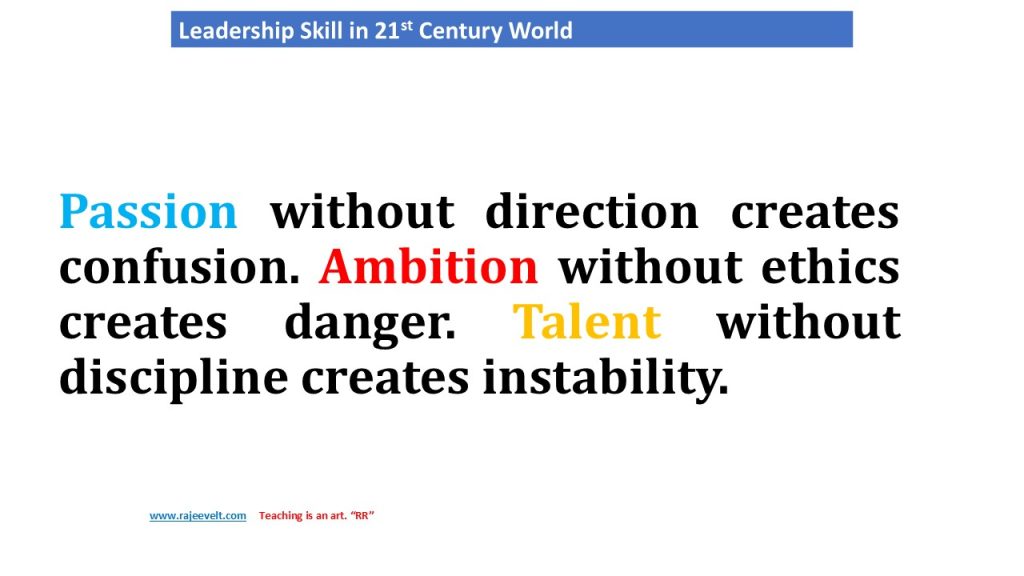
The Wild Horse Effect offers a powerful metaphor for understanding leadership, organizations, and human nature. It reminds us that energy alone is insufficient. Passion without direction creates confusion. Ambition without ethics creates danger. Talent without discipline creates instability.
Yet the metaphor also carries hope. The wild horse is not a symbol of failure. It is a symbol of extraordinary potential awaiting wise guidance.
Leadership in the modern world requires far more than authority or intelligence. It requires emotional maturity, ethical vision, patience, humility, and the ability to transform raw human energy into constructive purpose.
Whether in classrooms, corporations, governments, or personal life, we encounter the Wild Horse Effect continually. We see it in ambitious youth, competitive workplaces, political movements, technological revolutions, and within ourselves.
The challenge before modern leadership is not to suppress human intensity but to guide it responsibly.
I strongly believe that when strength discovers wisdom, and ambition discovers purpose, the wild horse no longer runs aimlessly across empty fields. It begins to carry humanity forward.
References
- Plato. Phaedrus. Classical discussions on the chariot metaphor and human impulses.
- Daniel Goleman. Emotional Intelligence: Why It Can Matter More Than IQ. Bantam Books.
- Peter Drucker. The Effective Executive. Harper Business.
- Stephen R. Covey. The 7 Habits of Highly Effective People. Free Press.
- Jim Collins. Good to Great. HarperCollins.
- Brené Brown. Dare to Lead. Random House.
- Viktor E. Frankl. Man’s Search for Meaning. Beacon Press.
- Simon Sinek. Leaders Eat Last. Portfolio.
- Carl Jung. Modern Man in Search of a Soul. Routledge.
- John C. Maxwell. Developing the Leader Within You. HarperCollins.
Resources and Learning Resources Web-links