


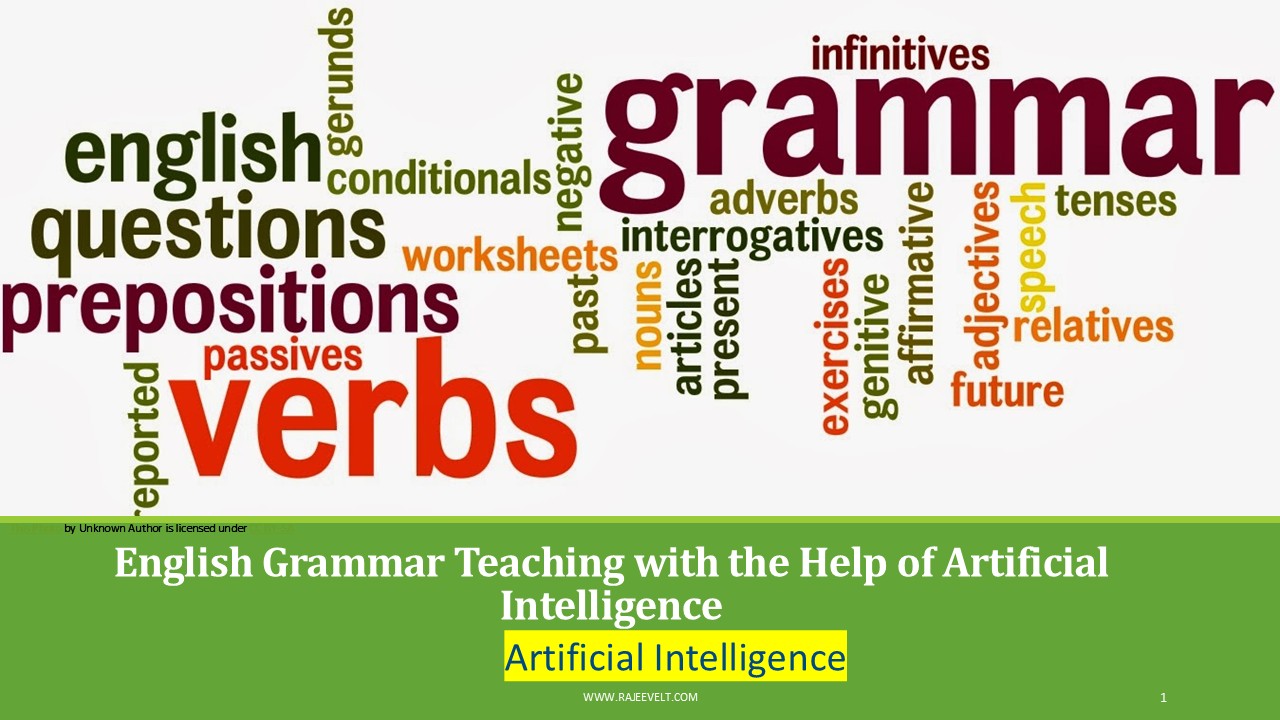
Teaching English Grammar in Secondary Class with the Help of Artificial Intelligence
Transforming Grammar Learning Through Innovation, Interaction, and Intelligent Technology
Introduction
English grammar forms the structural foundation of language learning. It enables students to communicate ideas clearly, organize thoughts logically, and express emotions effectively in both spoken and written forms. Grammar becomes increasingly important because students are expected to write analytical answers, participate in discussions, comprehend complex texts, and prepare for higher academic challenges.
However, traditional grammar instruction has often been associated with memorization, repetitive exercises, and rule-based teaching. We find that many students consider grammar difficult, mechanical, and disconnected from real communication. The conventional methods alone are no longer sufficient to sustain curiosity and engagement in modern classrooms, where learners are surrounded by technology and digital interaction.
Artificial Intelligence (AI) is transforming education by making learning more interactive, personalized, and learner-centered. AI-powered tools can support grammar teaching through instant feedback, adaptive exercises, automated assessment, intelligent conversation, and creative language practice. When used thoughtfully, AI allows us to create classrooms where grammar is not merely taught as a set of rules but experienced as a living system of communication.
The integration of AI into English grammar teaching is not intended to replace teachers rather, it empowers educators with innovative strategies to make grammar learning meaningful, practical, and enjoyable for Class 9 students.
Why Traditional Grammar Teaching Needs Transformation
Challenges Faced by Students in Learning Grammar
Many students struggle with grammar because they find grammatical rules abstract and difficult to apply in real-life communication. Learners often memorize definitions without understanding actual usage. Students may perform well in isolated exercises but fail to use grammar accurately in speaking and writing.
Common difficulties include:
- Confusion between tenses
- Incorrect sentence structures
- Problems with subject-verb agreement
- Limited vocabulary usage
- Lack of confidence in writing
Students also differ significantly in learning pace. Some understand concepts quickly, while others require repeated explanation and practice.
Lack of Engagement in Rule-Based Teaching
Traditional grammar instruction frequently relies on lectures, textbook exercises, and written drills. Although these methods have academic value, excessive dependence on them can reduce classroom interaction and creativity. Students may begin to perceive grammar as repetitive rather than communicative.
Modern learners respond more positively to visual learning, digital interaction, games, storytelling, and collaborative activities. Therefore, grammar instruction must evolve to reflect contemporary learning styles.
Fear of Making Grammatical Mistakes
Many adolescents hesitate to speak or write in English because they fear correction or embarrassment. This anxiety often prevents active participation in the classroom. Students need supportive learning environments where mistakes are treated as opportunities for improvement rather than failure.
Need for Personalized Learning
Every learner possesses unique strengths and weaknesses. Some students need additional support in sentence formation, while others require advanced enrichment tasks. Traditional classrooms often face difficulty in providing individualized grammar instruction to every learner. AI technologies help bridge this gap by offering adaptive learning experiences.
Role of Artificial Intelligence in English Grammar Teaching
Understanding AI in Simple Educational Language
Artificial Intelligence refers to computer systems designed to perform tasks that normally require human intelligence. In education, AI tools can analyze student responses, provide feedback, suggest corrections, generate exercises, and support interactive learning.
AI does not think like a human teacher, but it can process language patterns rapidly and assist students in practicing grammar effectively.
How AI Supports Grammar Instruction
AI enhances grammar teaching in several practical ways:
- It identifies grammatical errors instantly.
- It generates customized exercises.
- It offers explanations with examples.
- It supports speaking and writing practice.
- It tracks student progress over time.
- It encourages independent learning.
AI helps teachers save time on repetitive tasks and focus more on mentoring, creativity, and classroom interaction.
AI as a Teaching Assistant and Learning Companion
AI can function as:
- A virtual tutor for grammar practice
- A writing assistant for sentence correction
- A conversational partner for speaking activities
- An assessment tool for quizzes and worksheets
- A support system for differentiated learning
Students often feel more comfortable experimenting with language when interacting with AI tools because immediate feedback reduces fear and hesitation.
AI Tools for Teaching Grammar in Class 9
ChatGPT can generate grammar exercises, explain grammatical rules, create dialogues, conduct conversational practice, and provide instant corrections. Teachers can use it to:
- Create worksheets
- Generate comprehension passages
- Develop grammar games
- Practice sentence transformation
- Encourage creative writing
Example:
A teacher may ask ChatGPT:
“Create ten exercises on present perfect tense for Class 9 students with answers.”
Grammarly helps students improve writing accuracy by identifying grammar, spelling, punctuation, and sentence structure errors. It encourages self-correction and independent editing.
Educational Uses:
- Paragraph correction activities
- Writing improvement tasks
- Vocabulary enhancement
- Formal writing practice
QuillBot assists students in paraphrasing sentences and improving sentence structure. It helps learners understand how grammatical changes influence meaning and style.
Teachers can use it for:
- Sentence rewriting exercises
- Voice transformation practice
- Vocabulary expansion
Google Gemini supports content generation, explanations, and interactive questioning. Teachers may use it to prepare lesson ideas, grammar quizzes, and contextual examples.
Kahoot transforms grammar learning into a competitive and engaging quiz-based activity. Students participate actively and receive immediate feedback.
Quizizz enables teachers to create self-paced grammar quizzes with instant scoring and analytics. It promotes gamified learning and classroom participation.
AI-Based Grammar Checkers
AI grammar checkers help students identify:
- Sentence fragments
- Punctuation mistakes
- Verb agreement issues
- Incorrect tense usage
These tools encourage reflective learning and self-editing habits.
Classroom Applications of AI in Grammar Teaching
Teaching Tenses Through AI Conversation
Teachers can use AI chatbots to simulate conversations requiring specific tense usage.
Example:
Students interact with AI using past tense prompts:
- “Describe your last vacation.”
- “What did you learn yesterday?”
The AI provides corrections and improved sentence models.
Teaching Sentence Transformation
AI tools can instantly generate exercises such as:
- Active to passive voice
- Direct to indirect speech
- Simple to complex sentences
Students receive immediate explanations and examples.
Parts of Speech Identification
Teachers can provide passages and ask AI tools to highlight nouns, verbs, adjectives, adverbs, and pronouns. Visual identification improves conceptual clarity.
Error Correction Activities
AI-generated error correction exercises encourage analytical thinking.
Example:
“Identify and correct the errors in the following paragraph.”
Students compare their corrections with AI-generated suggestions.
Vocabulary and Sentence Formation
AI tools can generate vocabulary lists with sentence examples appropriate for Class 9 learners. Students practice contextual usage rather than memorization alone.
AI-Generated Quizzes and Worksheets
Teachers can quickly generate:
- Multiple-choice questions
- Fill-in-the-blanks
- Matching exercises
- Grammar puzzles
- Exit tickets
This saves preparation time and increases classroom variety.
Speaking and Writing Practice
Students may use AI tools for:
- Dialogue creation
- Speech drafting
- Paragraph writing
- Story continuation
- Debate preparation
AI provides suggestions that help learners improve fluency and grammatical accuracy.
Step-by-Step AI-Integrated Grammar Lesson Plan
| Topic: Present Perfect Tense | Class – (Class 9). Duration (45 Minutes) |
| Learning Objectives Students will: Understand the structure of the present perfect tense Use present perfect tense correctly in sentences Differentiate between past tense and present perfect tense Practice grammar through AI-supported activities | Introduction Activity (5 Minutes) The teacher displays sentences: “I visited Delhi last year.” “I have visited Delhi many times.” Students discuss differences in meaning. |
| Teaching Aids Smart board Internet connection Laptops or mobile devices AI tool: ChatGPT Digital worksheet | Explanation Phase (10 Minutes) The teacher explains: Structure: Subject + has/have + past participle Uses of present perfect tense Signal words such as “already,” “yet,” and “since” AI-generated examples are displayed on the screen. |
| AI-Based Classroom Activity (15 Minutes) Students interact with ChatGPT individually or in groups. Prompt: “Ask me five questions using present perfect tense.” Students respond in complete sentences. Example: AI: “Have you ever participated in a science exhibition?” Student: “Yes, I have participated in a science exhibition.” The AI provides correction and feedback. | Collaborative Practice (5 Minutes) Students create short dialogues using present perfect tense and exchange them with peers for review. |
| Assessment Strategies (5 Minutes) Quick AI-generated quiz Oral questioning Sentence correction task Exit ticket activity | Homework Task Using AI Students ask AI to generate ten sentences in present perfect tense and identify: Subject Helping verb Past participle Students then create five original sentences independently. |
Benefits of AI in Grammar Teaching
| Personalized Learning AI adapts learning activities according to student performance and pace. Advanced learners receive challenging tasks, while struggling learners receive additional support. | Instant Feedback Immediate correction helps students recognize mistakes quickly and improve continuously. |
| Student Engagement Gamification, interaction, and digital tools make grammar lessons more dynamic and enjoyable. | Improved Writing Accuracy AI-powered writing tools strengthen punctuation, sentence structure, and grammatical correctness. |
| Self-Paced Learning Students can practice grammar independently beyond classroom hours. | Confidence Building Regular AI-supported practice reduces fear and encourages participation in speaking and writing tasks. |
Challenges and Ethical Concerns
| Overdependence on AI Students may rely excessively on AI-generated answers instead of developing independent thinking. Teachers must encourage critical analysis and originality. | Internet Accessibility Issues Not all schools possess equal technological resources. Limited internet access can restrict implementation. |
| Data Privacy Concerns Educational institutions must ensure safe and responsible use of digital platforms. | Need for Teacher Supervision AI tools may occasionally provide inaccurate or inappropriate responses. Teachers must guide students carefully and verify content. |
| Maintaining Originality in Student Writing Students should use AI for assistance rather than copying complete answers. Teachers must promote authentic expression and creativity. | |
Role of Teachers in the AI Era
Technology cannot replace the emotional intelligence, ethical guidance, creativity, and mentorship provided by teachers. AI may support instruction, but teachers remain central to educational transformation.
In AI-integrated classrooms, teachers function as:
- Facilitators of learning
- Designers of meaningful activities
- Mentors for critical thinking
- Guides for ethical technology use
- Motivators of creativity and confidence
We must teach students not only how to use AI tools but also how to think independently, question intelligently, and communicate responsibly.
Three Real Classroom Scenarios
Scenario 1:
Improving Tense Usage Through AI Conversation
The student struggled with tense consistency in writing tasks. The teacher introduced AI conversation practice for ten minutes daily. Within one month, the student began using past, present, and future tenses more accurately during classroom discussions and written assignments.
Scenario 2:
Error Correction Through Grammarly
A group of students frequently made punctuation and sentence structure errors in paragraph writing. The teacher used Grammarly during editing sessions. Students gradually learned to identify recurring mistakes independently and demonstrated noticeable improvement in writing quality.
Scenario 3:
Gamified Grammar Learning Through Quizizz
Students showed low interest in grammar revision lessons. The teacher introduced Quizizz-based grammar competitions every Friday. Participation increased significantly, and students became more enthusiastic about grammar practice and peer collaboration.
Future of AI in English Language Teaching
The future of English grammar teaching will become increasingly interactive, adaptive, and learner-centered. AI technologies may soon provide:
- Real-time pronunciation correction
- Voice-based grammar assessment
- Personalized learning pathways
- Virtual language tutors
- Intelligent writing analytics
- Immersive grammar learning through augmented reality
However, meaningful education will continue to depend upon human values, creativity, empathy, and critical thinking. The most effective classrooms will combine technological innovation with strong teacher guidance.
I believe:
Artificial Intelligence is redefining the possibilities of English grammar teaching in secondary education. It transforms grammar from a rigid academic subject into an engaging, interactive, and practical communication tool. We can create classrooms that encourage experimentation, collaboration, creativity, and confidence. At the same time, balanced implementation remains essential. Technology should support human teaching rather than dominate it. Teachers should guide students toward responsible, ethical, and thoughtful use of AI tools.
When combined with professional teaching practices, Artificial Intelligence has the power to make grammar learning more meaningful, accessible, and inspiring for every Class learner. The future of grammar education lies not merely in technology itself, but in how wisely and creatively we use it to nurture language, expression, and human potential.
ArtificialIntelligence #EnglishGrammar #AIinEducation #LanguageTeaching #Class9English #SmartClassroom #DigitalLearning #TeacherInnovation #EducationalTechnology #GrammarTeaching