


Understanding the Confusion Between Discipline and Pressure
A recurring misunderstanding in contemporary education is the tendency to mistake discipline for pressure during conversations between schools and parents. When schools encourage children to follow routines, complete assignments regularly, respect timelines, or prepare sincerely for examinations, some parents quickly interpret these expectations as “pressure.” This reaction is understandable because every parent naturally wants their child to remain happy, relaxed, and emotionally secure. However, when we reflect carefully, we begin to recognize that many of the expectations labelled as pressure are actually essential forms of discipline that prepare children for life.
Discipline does not mean forcing a child to perform beyond their capacity, nor does it mean controlling every aspect of their behaviour. Instead, discipline means guiding a child toward responsible habits that gradually build their character, confidence, and capability. When we look closely at the lives of successful individuals—whether scientists, athletes, artists, entrepreneurs, or leaders—we rarely find achievements that emerged without disciplined effort. Success rarely grows from comfort alone. It grows from consistent practice, structured learning, and responsible habits developed over time. When children are encouraged to wake up on time, attend school regularly, finish their tasks, and practice their skills daily, they are not being subjected to pressure. They are learning how to organize their lives, manage their responsibilities, and pursue goals with persistence.
The misunderstanding occurs when discipline is seen only through the lens of immediate discomfort rather than long-term growth. Many valuable life lessons initially feel challenging because they require effort, patience, and repetition. Yet these very experiences help children develop resilience and self-confidence. We should therefore shift our perspective and help children understand that discipline is not something imposed upon them but something that gradually strengthens their inner ability to succeed. When discipline is explained with clarity and practiced with care, children begin to realize that it is not a burden but a powerful tool that helps them navigate life’s demands. When we replace the language of pressure with the language of discipline, we allow children to see effort not as a punishment but as a meaningful path toward improvement and achievement.

Discipline as the Foundation of Personal Growth
When we examine human development closely, we discover that discipline plays a central role in shaping personal growth. Every meaningful skill—whether intellectual, physical, artistic, or emotional—requires consistent effort over time. No child suddenly becomes proficient in mathematics, language, music, sports, or problem-solving without repeated practice and focused learning. Discipline is the process that allows this growth to occur gradually and steadily. Imagine a child learning to read fluently. In the beginning, the child struggles to recognize letters, pronounce words, and understand sentences. Reading may feel slow and demanding. If someone were to interpret this effort as pressure and remove the expectation of regular practice, the child might temporarily feel relieved. However, the child would also lose the opportunity to develop a foundational skill that supports lifelong learning.
Discipline ensures that the child continues practicing until reading becomes natural and enjoyable. A similar pattern appears in every domain of life. Consider a young student learning to solve mathematical problems. At first, the concepts may seem confusing, and mistakes may occur frequently. A disciplined learning routine encourages the child to revisit the concept, ask questions, practice repeatedly, and gradually improve. The child begins to experience something deeply empowering through this process: the realization that effort leads to progress. This realization becomes a cornerstone of confidence. Children who understand that their abilities can improve through disciplined practice develop what psychologists often describe as a growth mindset. They stop fearing challenges because they recognize that challenges are opportunities to learn. In contrast, when children are shielded from disciplined effort in the name of avoiding pressure, they may struggle to develop perseverance. They may begin to associate difficulty with failure rather than growth. Discipline therefore serves as a training ground for resilience. It teaches children to remain patient when progress is slow and to continue working even when immediate rewards are not visible. Over a period, these habits transform the child’s attitude toward learning and responsibility. The child begins to see discipline not as an external demand but as a personal strength. This transformation is one of the most valuable outcomes that education can achieve because it prepares children to face the complexities of adult life with confidence and determination.
Discipline and the Development of Responsibility
Discipline plays a decisive role in shaping a child’s sense of responsibility. A child is not born with the ability to manage time, complete tasks independently, or understand the importance of commitment. These abilities are cultivated gradually through consistent guidance and structured expectations. When a child is encouraged to complete assignments on time, prepare for examinations, or participate responsibly in classroom activities, the child begins to understand that actions have consequences and that effort produces results. Responsibility grows when a child learns that commitments must be honoured. If children are allowed to avoid responsibilities in the name of reducing pressure, they may temporarily feel comfortable, but they lose valuable opportunities to develop accountability. Responsibilities cannot be postponed indefinitely in adult life. A professional must meet deadlines, fulfil obligations, and perform duties with reliability. These habits do not appear suddenly in adulthood; they are formed during childhood through disciplined routines. When children follow structured schedules for study, play, and rest, they gradually learn how to balance multiple responsibilities. This process strengthens their decision-making ability and builds maturity. Parents and educators therefore perform an essential role when they create environments where discipline is practiced respectfully and consistently. Such environments communicate a powerful message to children: effort and responsibility are integral parts of personal growth. Over a period, children begin to take pride in fulfilling their duties. They experience satisfaction when they complete their tasks and contribute positively to their surroundings. Discipline therefore becomes more than a set of rules; it becomes a training ground for responsible living. The children develop habits that guide them long after formal education has ended through disciplined practice.
Lessons from the World of Sports
The world of sports offers one of the clearest illustrations of the power of discipline. Every accomplished athlete follows a rigorous routine that involves training, practice, physical conditioning, and strategic preparation. Success in sports rarely emerges from spontaneous effort. It is the outcome of years of disciplined practice carried out with determination and patience. A young athlete often wakes early in the morning to train before attending school. The athlete repeats drill countless times in order to refine speed, coordination, and endurance. Coaches provide guidance and corrections, and athletes must accept these instructions with humility and dedication. Such routines might appear demanding to an outside observer. Yet athletes themselves recognize that discipline is the essential pathway to excellence. The discipline of training strengthens not only the body but also the mind. It teaches athletes how to manage fatigue, overcome setbacks, and remain focused on long-term goals. When a player misses an important shot or loses a competition, discipline encourages the player to return to practice with renewed determination rather than surrender to disappointment. This attitude of perseverance is a defining characteristic of champions. The medals and recognition that athletes receive represent only the visible outcome of a much deeper process of disciplined preparation. If discipline were replaced by comfort, athletes would never reach their highest potential. The lesson for education is clear. Students, like athletes, develop their abilities through structured effort and continuous improvement. Discipline in learning functions much like discipline in sports: it builds resilience, focus, and mastery. Children can understand that discipline is not an obstacle but a powerful ally in the pursuit of excellence.
Discipline in the Arts and Creative Pursuits
Creative fields such as music, painting, dance, and writing also demonstrate the necessity of discipline. Many people assume that creativity emerges solely from inspiration or natural talent. While talent plays an important role, true mastery in the arts requires sustained practice and disciplined dedication. Consider the example of a child learning a musical instrument. During the early stages of training, the child must practice scales repeatedly, refine hand movements, and learn to read musical notation. Progress may appear slow at first, and mistakes are inevitable. However, disciplined practice gradually transforms effort into skill. The child develops technical precision and expressive ability over a period. The music that eventually flows beautifully from the instrument is the result of countless hours of disciplined preparation. The same principle applies to painting, dance, and literary creation. Artists who achieve distinction rarely rely solely on inspiration. They follow daily routines of practice, observation, and refinement. They strengthen their ability to translate imagination into meaningful expression through discipline. Without disciplined effort, creative potential often remains unrealized. The arts therefore offer a profound lesson about the relationship between freedom and structure. Discipline provides the structure that allows creativity to flourish. It equips individuals with the technical foundation required to express ideas effectively. When children are encouraged to practice creative skills with patience and consistency, they discover the joy of gradual improvement. They realize that discipline does not suppress creativity; instead, it nurtures creativity by giving it form and direction.
Discipline and Emotional Strength
Discipline contributes significantly to the development of emotional strength. Life inevitably presents challenges, disappointments, and unexpected difficulties. Individuals who have cultivated disciplined habits often respond to these situations with greater stability and resilience. Discipline teaches children how to regulate their emotions and maintain focus even when circumstances become demanding i.e. a student preparing for an examination may initially feel anxious or overwhelmed. A disciplined approach encourages the student to create a study plan, divide tasks into manageable sections, and work consistently toward completion. The student learns that organized effort can reduce uncertainty and build confidence through this process. Emotional resilience grows when individuals learn to confront challenges rather than avoid them. Discipline promotes this resilience by promoting persistence and self-control. Children who practice disciplined routines gradually learn that setbacks are temporary and that improvement is possible through continued effort. They become less fearful of failure because they understand that mistakes are opportunities for learning. Emotional maturity develops when children realize that difficulties are part of growth rather than signs of inadequacy. Discipline strengthens the mind and prepares individuals to navigate life’s complexities with composure and determination.

Discipline in Professional Life
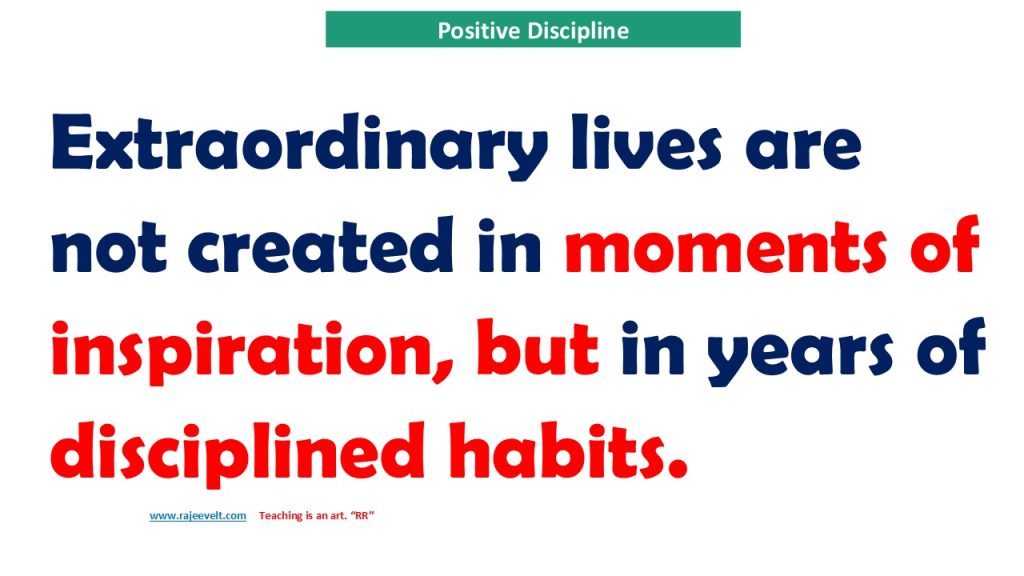
Discipline functions as a fundamental principle in professional life that governs productivity and success. Every profession requires individuals to manage responsibilities with consistency and reliability. Doctors must maintain rigorous standards of medical practice. Engineers must adhere to precise procedures and safety protocols. Teachers must prepare lessons, guide students, and evaluate progress with dedication. These responsibilities cannot be fulfilled effectively without disciplined habits. Professionals who succeed in their fields typically organize their time carefully, pursue continuous learning, and maintain strong work ethics. Their achievements are not the result of occasional bursts of motivation but of sustained effort over many years. Discipline enables professionals to remain focused even when faced with demanding workloads or complex challenges. It encourages them to persevere when progress seems slow and to maintain high standards in their work. Individuals who develop disciplined habits during their educational years often find it easier to adapt to professional environments. They possess the ability to prioritize tasks, manage deadlines, and collaborate effectively with colleagues. In this sense, discipline functions as a bridge between education and professional achievement. Schools therefore serve an essential role in preparing students not only for examinations but also for the responsibilities they will encounter in their future careers.
The Role of Schools and Parents
The cultivation of discipline requires cooperation between schools and parents. Schools establish structured environments where students learn routines such as attending classes regularly, completing assignments, and participating respectfully in academic activities. Teachers guide students toward productive habits and provide constructive feedback that supports improvement. Parents reinforce these lessons by encouraging responsibility and consistency at home. When schools and families communicate clearly and support each other’s efforts, children receive a consistent message about the value of discipline. This partnership strengthens the learning environment and promotes balanced development. Parents who explain the purpose behind academic expectations help children understand that discipline serves their long-term interests. Instead of perceiving school responsibilities as burdens, children begin to view them as opportunities for growth. Effective collaboration between educators and parents therefore transforms discipline into a shared educational philosophy. Such cooperation ensures that children develop habits that support both academic achievement and personal development.
The Development of Self-Discipline
The ultimate goal of education is not merely to enforce discipline but to cultivate self-discipline. Self-discipline emerges when individuals learn to guide their own actions without constant supervision. Children gradually acquire this ability when they understand the reasons behind rules and expectations. When teachers and parents explain the importance of effort, responsibility, and perseverance, children begin to internalize these values. Disciplined behaviours become natural habits rather than imposed requirements over a period. A student who develops self-discipline manages study schedules independently, prepares thoroughly for examinations, and approaches challenges with determination. Such students demonstrate initiative and confidence because they recognize their capacity to shape their own progress. Self-discipline empowers individuals to pursue goals with clarity and persistence throughout life. It encourages lifelong learning and continuous improvement. The development of self-discipline therefore represents one of the most meaningful achievements of education.
Discipline as the Architecture of Success
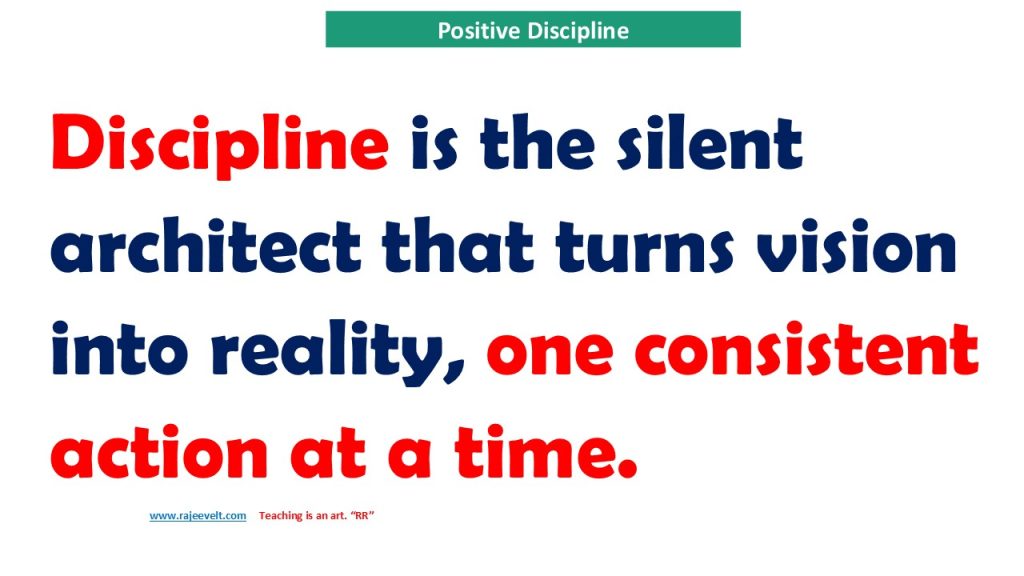
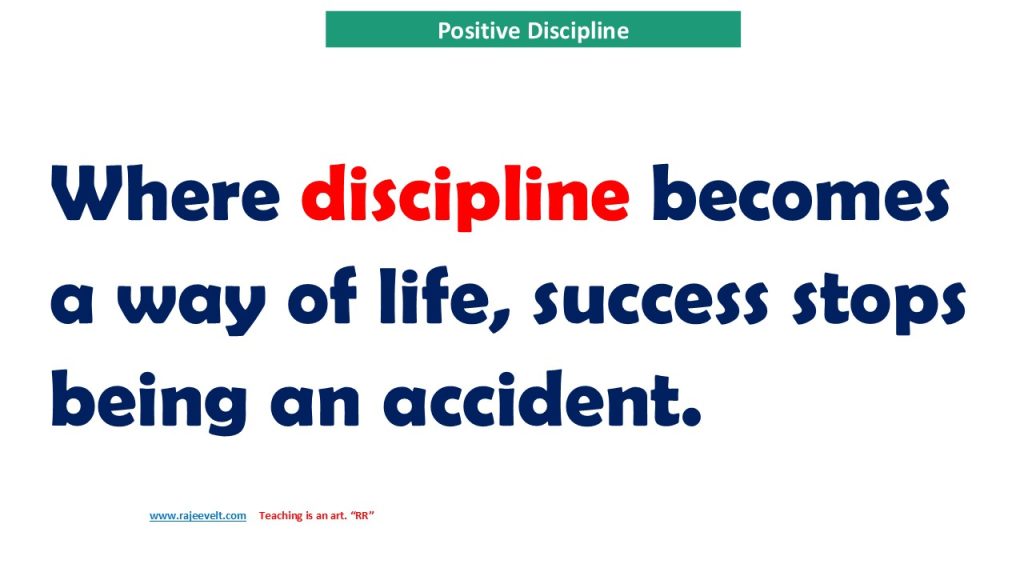
When we observe the patterns of achievement across different fields, a consistent principle emerges: discipline forms the architecture upon which success is built. Dreams and ambitions inspire individuals to pursue meaningful goals, but disciplined effort transforms those aspirations into reality. Every remarkable accomplishment in science, art, leadership, or innovation reflects years of persistent dedication. Discipline provides the structure that allows individuals to convert ideas into achievements and intentions into lasting contributions. The habits of discipline established during education become lifelong assets for children. They guide individuals in managing responsibilities, overcoming obstacles, and pursuing excellence with integrity. When society replaces the language of pressure with the language of discipline, it helps young minds understand the true purpose of structured effort. Discipline does not restrict human potential; it enables potential to flourish. It strengthens character, nurtures resilience, and supports meaningful progress. Individuals who embrace disciplined habits discover in every stage of life that success is not accidental but the natural outcome of consistent effort and purposeful action.
Grow Together Glow Together
Regards
Rajeev Ranjan
School Education
“Let knowledge grow from more to more.”
Alfred Tennyson, “In Memoriam”, Prologue, line 25
References
Jane Nelsen (2006). Positive Discipline. New York: Ballantine Books.
Jane Nelsen, Lynn Lott, & H. Stephen Glenn (2015). Positive Discipline in the Classroom: Developing Mutual Respect, Cooperation, and Responsibility in Your Classroom. New York: Three Rivers Press.
Alfred Adler (1956). The Individual Psychology of Alfred Adler. New York: Basic Books.
Rudolf Dreikurs (1968). Psychology in the Classroom: A Manual for Teachers. New York: Harper & Row.
Daniel Goleman (1995). Emotional Intelligence: Why It Can Matter More Than IQ. New York: Bantam Books.
Daniel J. Siegel & Tina Payne Bryson (2012). The Whole-Brain Child: 12 Revolutionary Strategies to Nurture Your Child’s Developing Mind. New York: Delacorte Press.
Carol S. Dweck (2006). Mindset: The New Psychology of Success. New York: Random House.