


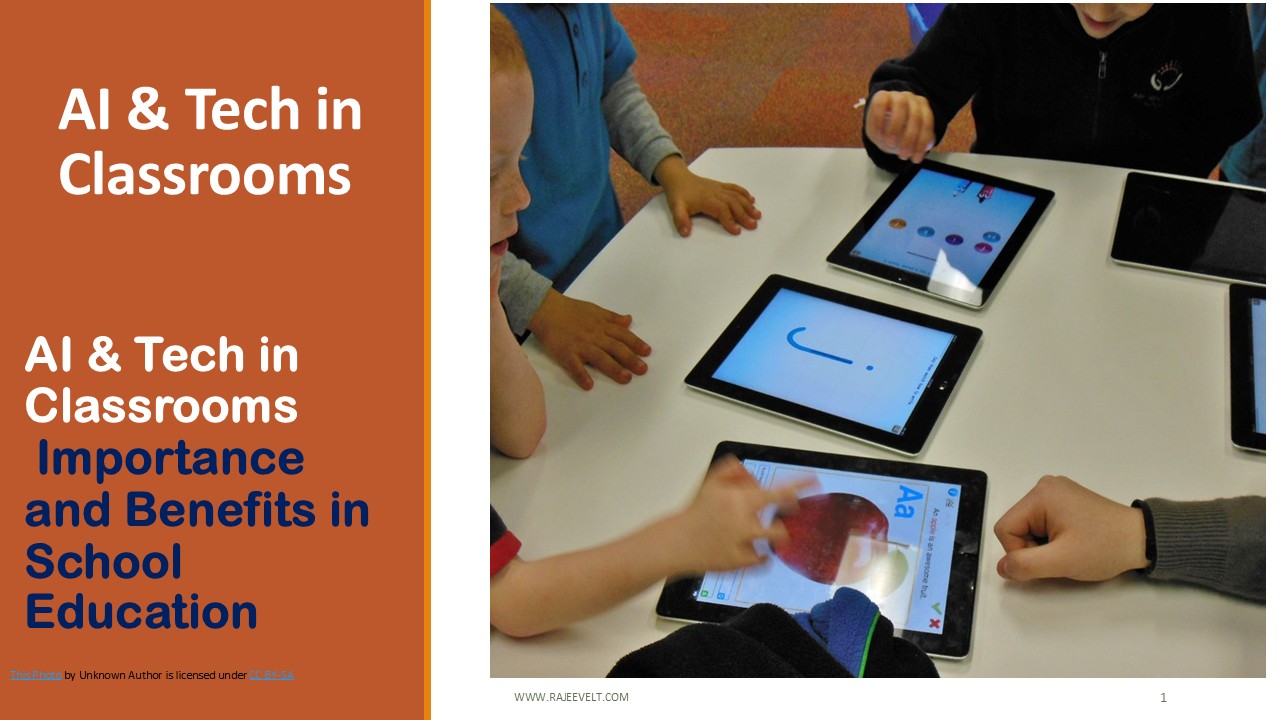
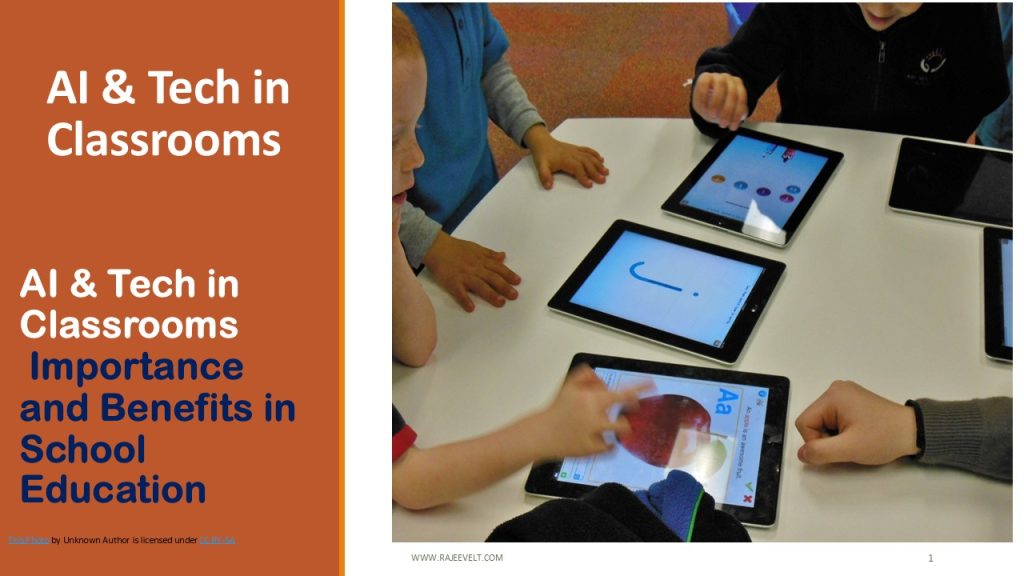
AI & Tech in Classrooms: Importance and Benefits in School Education
Introduction
Walk into a classroom today — in Bengaluru, Delhi, Hyderabad, Kolkata, Boise, or anywhere in between — and you’re likely to find technology doing far more than projecting slides. Adaptive learning platforms are quietly tracking which concepts a student has mastered and which ones need another pass. Teachers are using AI to draft lesson plans in minutes instead of hours. AI literacy is about to become as routine a subject as mathematics, with the government mandating it from Class 3 starting the 2026-27 academic year in India. This shift isn’t happening because technology is fashionable — it’s happening because AI and digital tools are solving problems that traditional classrooms have struggled with for decades: uneven attention, one-size-fits-all pacing, and teachers stretched too thin to give every child what they individually need.
1. Personalized Learning at Scale
The single biggest promise of AI in education is personalization — something teachers have always wanted to offer but rarely had the bandwidth to deliver to 30-40 students at once. Adaptive platforms can identify a student’s specific knowledge gap in real time and adjust the difficulty, pacing, or explanation style accordingly, rather than waiting for a unit test to reveal where they’ve fallen behind.
This isn’t just theoretical. Research summarized in the OECD’s Digital Education Outlook found that students using AI tutoring-style tools in a classroom study in Turkey saw substantially larger short-term performance gains than those using a standard, non-adaptive interface — evidence that when AI is designed to teach and guide rather than simply hand out answers, it measurably accelerates learning. Similarly, AI-driven language platforms are already giving young learners in under-resourced settings access to real-time, personalized English instruction that would otherwise require a private tutor.
2. Freeing up Teachers for What Matters Most
A recurring finding across recent teacher surveys is that AI tools are giving educators back time — time previously spent grading, drafting worksheets, or generating differentiated materials for students at different levels. In several surveys, a majority of teachers report that AI has improved their teaching methods, and roughly half say it has given them more time for direct interaction with students.
That reclaimed time matters because the part of teaching that’s hardest to automate — building relationships, mentoring, recognizing effort, helping a student push through frustration — is also the part that most shapes whether a student stay engaged with school at all. Rather than replacing teachers, well-designed AI tools are increasingly positioning them as mentors and guides, supported by AI for the repetitive, time-consuming parts of the job.
3. Bridging Access and Equity Gaps
One of the more underappreciated benefits of AI in education is its potential to level the playing field between well-resourced and under-resourced schools. A student in a small-town school without access to specialized tutors can still get personalized, on-demand help from an AI-powered tool. Multilingual AI systems can translate and adapt content for students who don’t speak the language of instruction fluently. Adaptive assessment tools can flag learning gaps early, before they compound into larger academic setbacks — something particularly valuable in large, under-resourced public school systems.
India’s national AI curriculum rollout is explicitly built around this equity goal. Framed around the idea of “AI for Public Good,” the curriculum for younger students (Classes 3-5) emphasizes interactive, concept-first learning — introducing every child, regardless of school type, to computational thinking and responsible technology use from the foundational stage, rather than treating AI literacy as a privilege of well-funded private schools.
4. Preparing Students for an AI-Driven Future
Beyond the classroom itself, there’s a straightforward workforce-readiness argument for teaching AI and computational thinking early. As AI reshapes nearly every industry, students who understand how these systems work — and, just as importantly, their limitations and ethical implications — will be better equipped to navigate a job market where AI fluency is increasingly a baseline expectation rather than a specialized skill.
This is precisely the reasoning behind India’s curriculum design, led with input from IIT Madras: the goal is not to turn every child into a coder, but to build computational thinking, data literacy, and ethical reasoning as foundational skills alongside subjects like language and mathematics. Officials have described this as a universal skill tied to how students understand and interact with “the world around us,” rather than a narrow technical elective.
5. Real-Time, Actionable Assessment
Traditional assessment tells you how a student performed after the fact — a test score at the end of a unit, a report card at the end of a term. AI-powered assessment tools shift this to something closer to real time: identifying where a student is struggling as it happens, so teachers can intervene before a small gap becomes a semester-long setback. Some schools are also shifting assessments toward live, AI-assisted explanation formats, which help distinguish genuine understanding from memorized or copied answers.
Similar AI tools are being applied to track attendance patterns and student engagement, for school administrators, helping identify students at risk of disengagement or chronic absenteeism early enough to act.
6. Improved School-Family Communication
A less-discussed but genuinely useful benefit is in communication. AI-powered chatbots and automated updates are helping schools keep parents informed in real time — about assignments, attendance, or upcoming events — in a way that’s accurate, consistent, and available outside school hours. This kind of AI-assisted infrastructure is becoming a practical necessity rather than a nice-to-have as parent expectations around communication rise , particularly for large schools trying to maintain consistent contact with hundreds of families.
7. Scalable, Evidence-Backed Tutoring Support
AI tutoring tools are increasingly being used to deliver short, focused bursts of practice and feedback — supplementing, not replacing, classroom teaching. This kind of support is particularly valuable for addressing learning gaps and disengagement at scale, challenges that have proven difficult for traditional, teacher-only interventions to solve given limited classroom hours and large student-to-teacher ratios. Industry leaders increasingly frame this as AI’s most durable use case: not flashy, but consistently useful for keeping students supported between classroom sessions.
Making the Benefits Real: What Responsible Implementation Looks Like
The benefits above are genuine, but they depend on how AI and technology are introduced. The clearest lesson from schools further along in this transition is that thoughtful guardrails — teacher training, human oversight of AI-driven decisions, and clear data privacy protections — aren’t obstacles to realizing these benefits; they’re what make the benefits sustainable rather than short-lived. India’s own rollout plan reflects this, pairing the curriculum mandate with large-scale teacher training through the NISHTHA program and a dedicated Centre of Excellence in AI for Education.
Conclusion
AI and technology in classrooms aren’t simply modernizing school education — they’re addressing some of its oldest, most stubborn challenges: giving every student individualized attention, giving teachers back the time to mentor rather than just manage, and preparing an entire generation for a world where AI literacy will be as fundamental as reading and arithmetic. It isn’t a story about machines replacing teachers. It’s a story about technology finally giving teachers and students the support that large, diverse classrooms have always needed but rarely had.